


18 March 2026
|
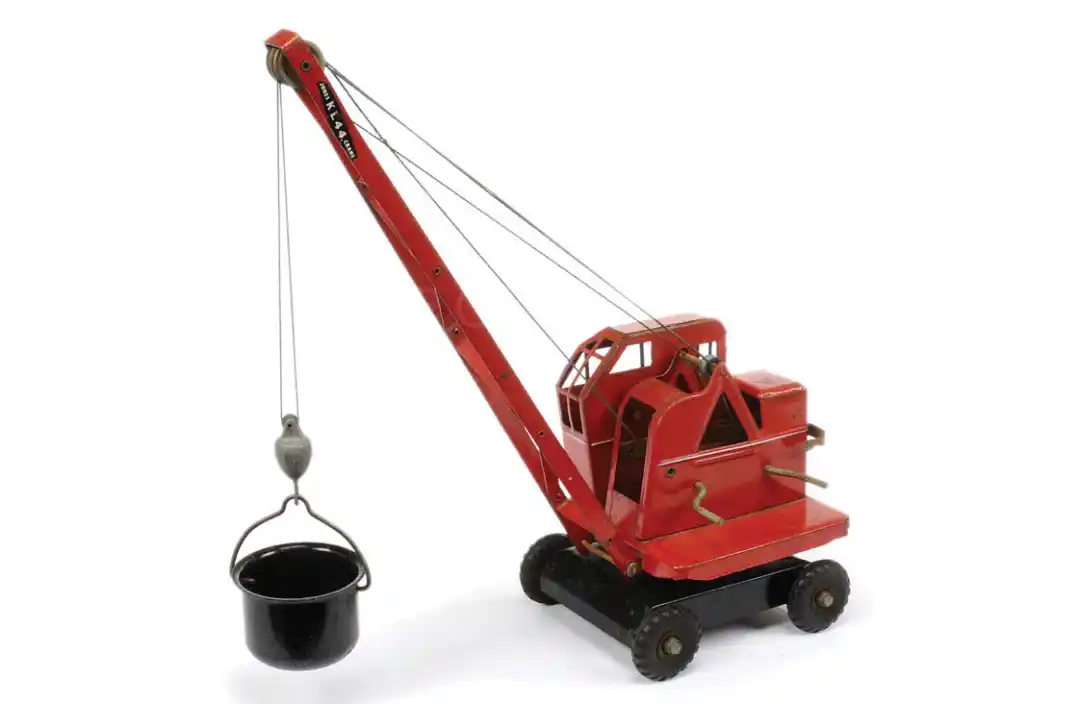 Tri-ang pressed steel Jones KL44 Mobile Crane
The toymaking company Lines Brothers was founded by William, Walter and Arthur Lines. The company used Tri-Ang as a brand name because a triangle is made of three lines. Here is everything you need to know about this brand and the brothers who made it.
Before it was Tri-ang Toys
The history of Tri-ang Toys can be traced back to around 1850 when the Lines family set up a toy making business at Bagnidge Wells, an early spa village located north of London.
Toys became the firm’s mainstay and in 1876 brothers George and Joseph Lines established a new factory in a former steam works at 457 Caledonian Road, close to where St Pancras Station now stands.
This factory began making all manner of playthings for the children of the wealthy London upper and middle classes.
These included rocking horses, velocipede horses, toy horse and cart combinations with iron wheels, dolls houses, toy forts, horses for fairs and steam circuses, garden swings and even wheelbarrows.
The factory thrived and soon over one hundred craftsmen were employed in the business.
Suggested article: Your Guide to Palitoy: Best of British
Becoming Tri-ang Toys
In 1919 Joseph Lines’ three sons William, Arthur and Walter returned to the company after serving in the Armed Forces during the Great War.
The brothers were eager to establish their own company and quickly set up Lines Brothers Limited taking over premises on Ormside Street off London’s Old Kent Road.
With Walter Lines largely in charge of design, they soon forged links with overseas customers and also supplied London’s famous department store Harrods with toys. The brothers were so successful that in 1924 a move was made to a much larger new factory at Merton in South London.
It was at this time that Lines Brothers Ltd adopted its world-famous Tri-ang Trademark. The red triangle design reflects three equal lines representing the three Lines brothers.
There were, however three other directors at the helm of the company: G.M. Campbell, R.C. Munro and R. Freeman. The latter two men both came from an engineering background, so it was no surprise that Lines Brothers early Tri-ang offerings were very sturdy well-built toys constructed with a combination of wood and metal with plenty of play value.
What are the Best Tri-ang Toys?
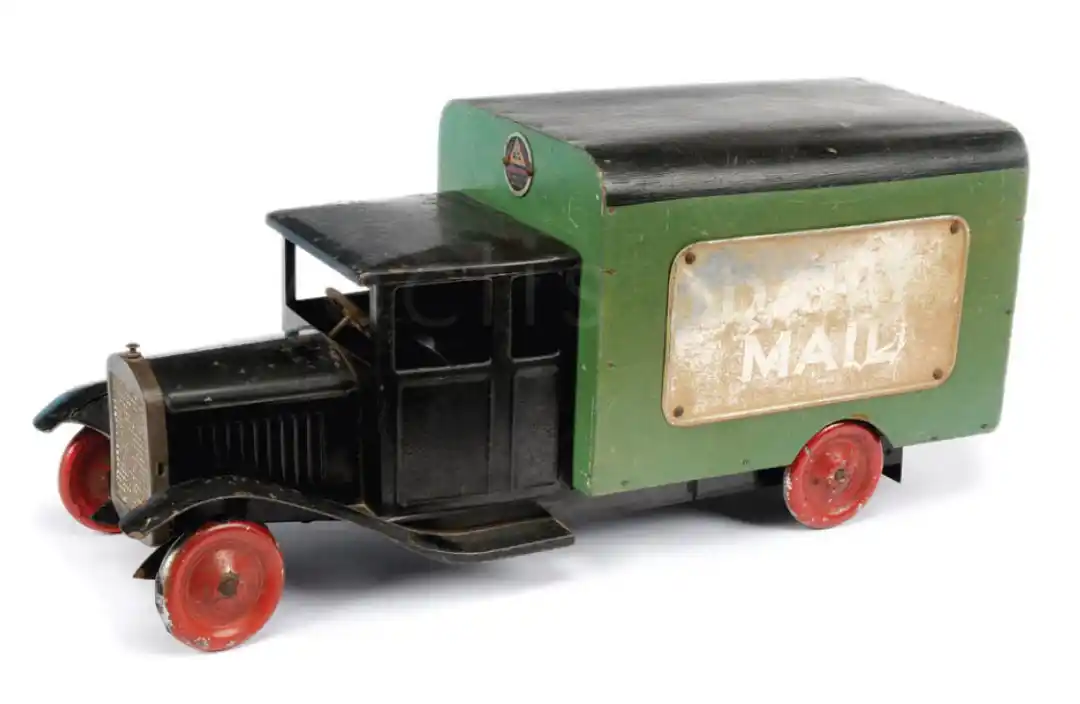
The late 1920s saw the release of a delightful series of Tri-ang road vehicles known as the Dolls Motor Vans. These had wooden wheels and tinplate radiators.
The next series included some splendid touring cars, a smart Charabanc and a motor taxi.
It was back to wooden construction for a small range of vans with Bull Nose radiators and many of these vehicles carried advertising for national newspapers and Carter Paterson parcel deliveries.
A tipping wagon and an impressive box van were produced in the ‘Titan’ series in the late 1920s boasting new innovations such as ‘real steering’ and smart rubber tyres.
One of the most impressive toys of this period was a super red fire engine with a metal bell and removable ladder. This toy was still part wood and part metal in construction.
These are all examples of sought after collectors’ items and finding them in pristine condition is difficult.
Tri-ang Lorries
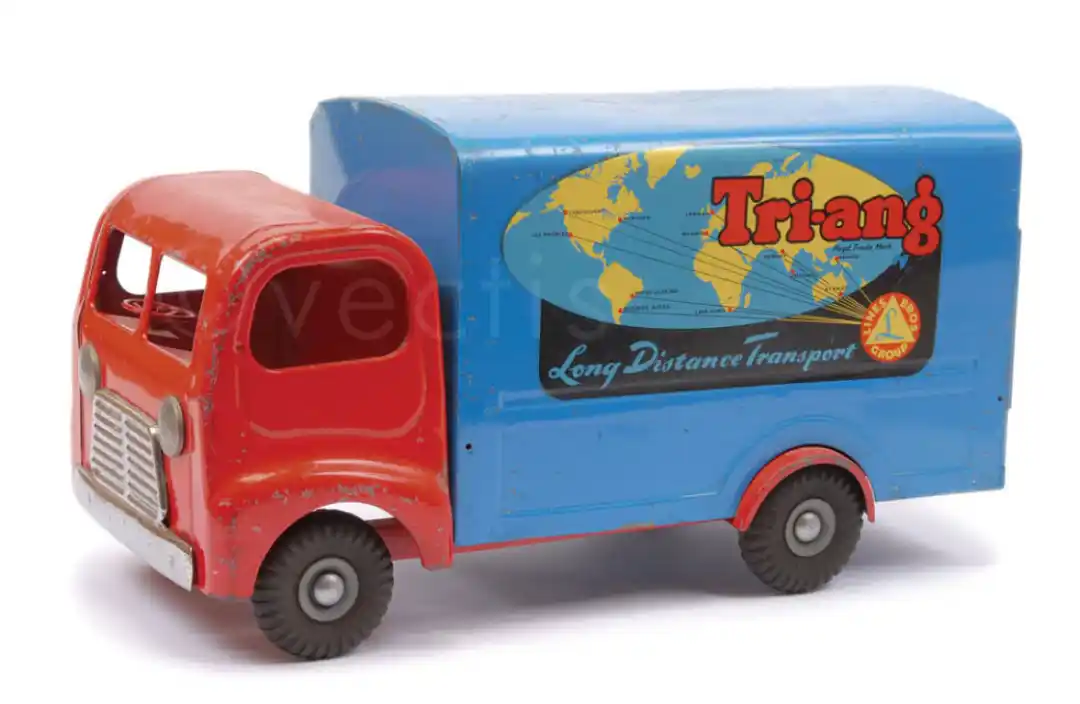
All-steel Tri-ang lorries were first made in 1930 finished in stove enamelled paint and steel wheels with rubber tyres.
The six different trucks in this range were a van, petrol tanker, breakdown wagon, timber lorry, milk lorry and a Carter Paterson box van.
Soon these pressed steel trucks (many of which were based on a Bedford lookalike vehicle) began rolling off the production line in their thousands and the Merton factory workforce doubled to around 1,000 by the early years of the 1930s.
In 1931 Line Brothers Ltd bought Hamleys, London’s famous toy retailer who were financially overstretched following the building of its fine new department store.
Lines Bros went public in 1933 with the issue of 200,000 shares and the business developed greatly throughout the 1930s.
Tri-ang pressed steel lorries were made until the outbreak of World War II during which the whole Merton factory was requisitioned by the Ministry of Defence and turned over to making machine guns, shell cases and magazines for Spitfire and Hurricane fighter planes.
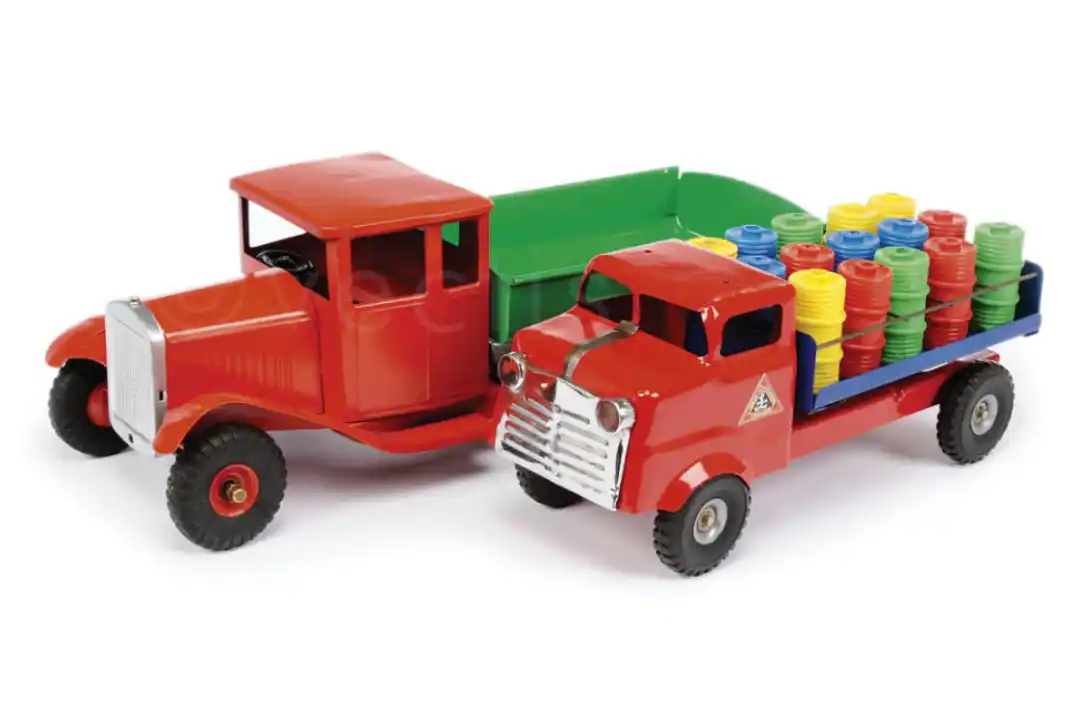
Collecting Tri-ang pressed steel and tinplate toy vehicles can be great fun but you do need plenty of space when it comes to putting them on display! It can also be very difficult to collect mint or great condition models so be prepared to really search for what you want.
The Story of Line Brothers is a book that will explain in even greater detail the story of the people that created this world-famous toy brand.
Tri-ang Collectables takes a wide look at collecting Tri-ang, including the tools and parts available.