


23 February 2026
|
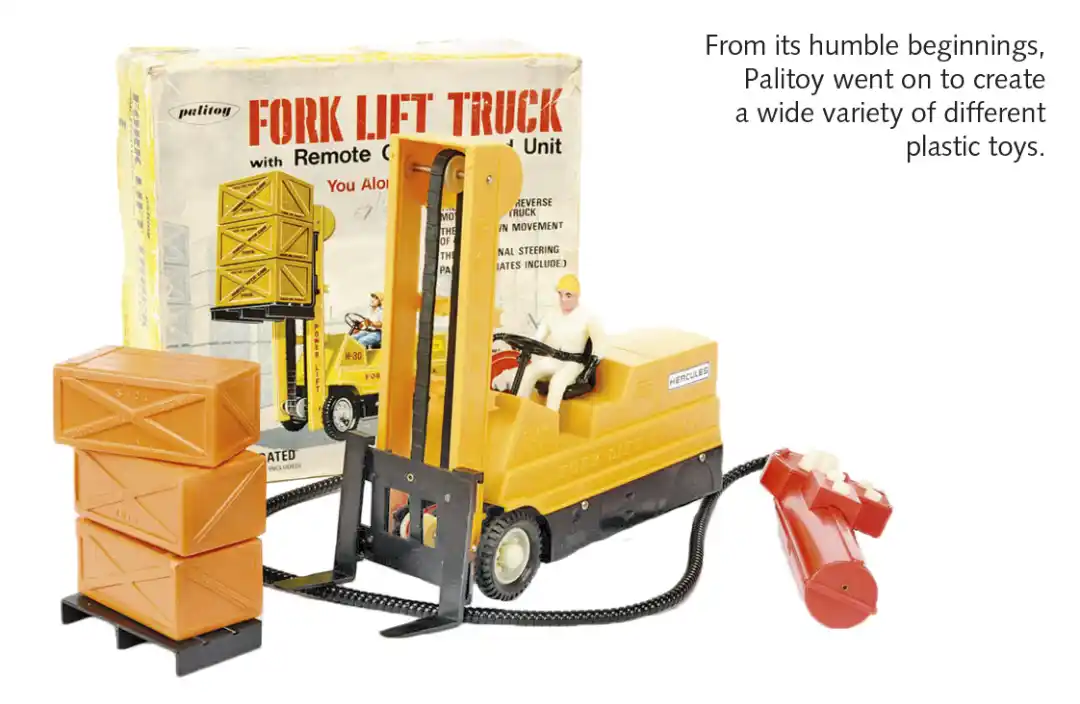 Palitoy Fork Lift
The Palitoy name is now big business with collectors willing to pay large money for that all-important logo, but it came from humble beginnings with the name often being hardly noticed. Covering areas from construction to aviation and even Star Wars figures, Palitoy really was the best of British brands.
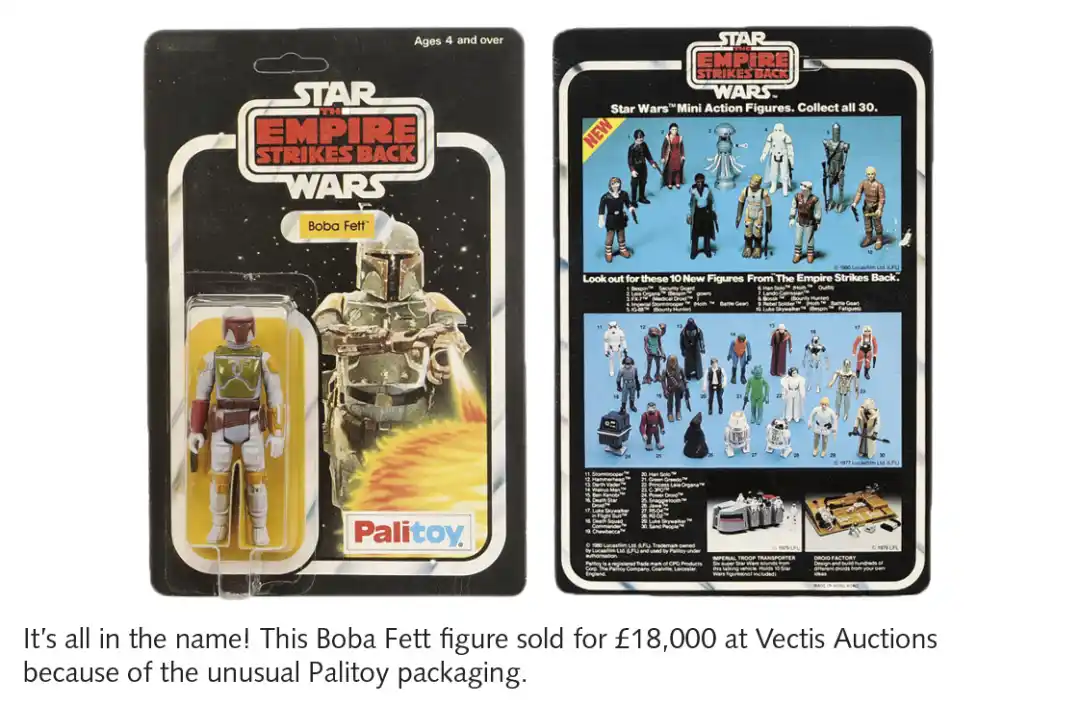
In some ways today it isn’t the figures and models that people are paying for, it is the name on the blister pack because the Palitoy logo is slightly unusual compared to more common examples.
Now auctioneers are crying out for those original Palitoy Star Wars figures because there simply aren’t enough to go around – once again another testament to the company’s influence.
History of Palitoy
Although Palitoy is best known for Action Man and Star Wars, the company’s history dates to 1919 when, at the age of just 18, founder Alfred Pallet decided to set up a company to manufacture celluloid and plastic fancy goods, including a small number of toys.
Originally the firm was known as Cascelloid Limited and progress was exceptionally slow – in the first year it only made £90. Cascelloid’s first factory was based inside an old lodging house in Britania Street, Leicester.
However, the company was saved – like so many early toy manufacturers – by Woolworth’s, who wanted cheap celluloid toys to sell in its stores.
In 1920 it placed orders for several Cascelloid items, including a toy windmill known as the Flitafast. A bit like Airfix, Cascelloid also produced hair slides, rattles, egg timers and other kitchen utensils… toys were just part of the business.
Things were going well until a fire in September 1927, which destroyed the Britania Street factory, along with an entire stock of products and raw materials. Even worse, one worker was killed in the blaze.
Despite this tragic set back a new factory was opened six months later in a new location: Cobden Street, Leicester. Once in the new premises, things progressed at a rapid pace and by 1930 Cascelloid was employing 250 people and manufactured products for Woolworth’s, Marks and Spencer, Boots, Rowntrees, Courtaulds and Huntley Palmer.
Then in 1931 Cascelloid became a subsidiary of British Xylonite Company Ltd. which specialised in plastic innovations – in fact, it was the first company to use injection-moulding to make products.
Throughout the ‘40s and ‘50s Cascelloid continued to add to its toy range and began producing push and pull-along toys, squeaky baby toys, model vehicles, fancy dress costumes, board games and even table tennis sets.
However, it was really the mid 1960s that saw the company rise to new levels, thanks to the introduction of the Tiny Tears doll in 1965 and then Action Man a year later.
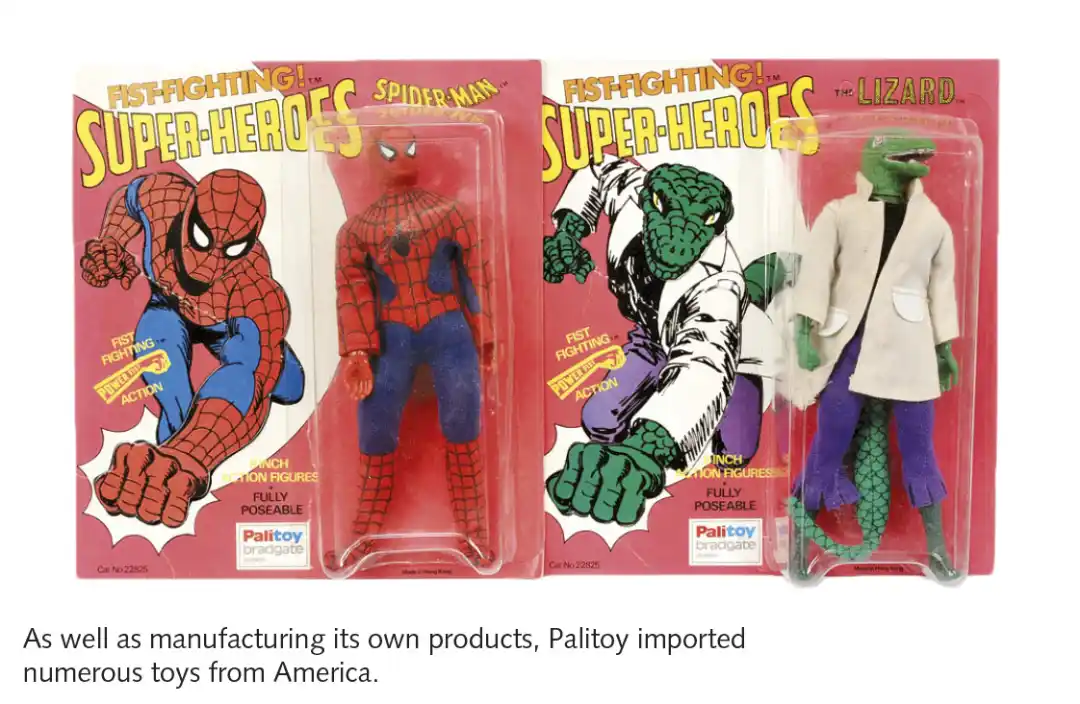
Now trading as Palitoy, the company fought off fierce competition from Lines Bros to acquire the production rights to create toys based on Hasbro’s exceptional GI Joe line of boy’s dolls.
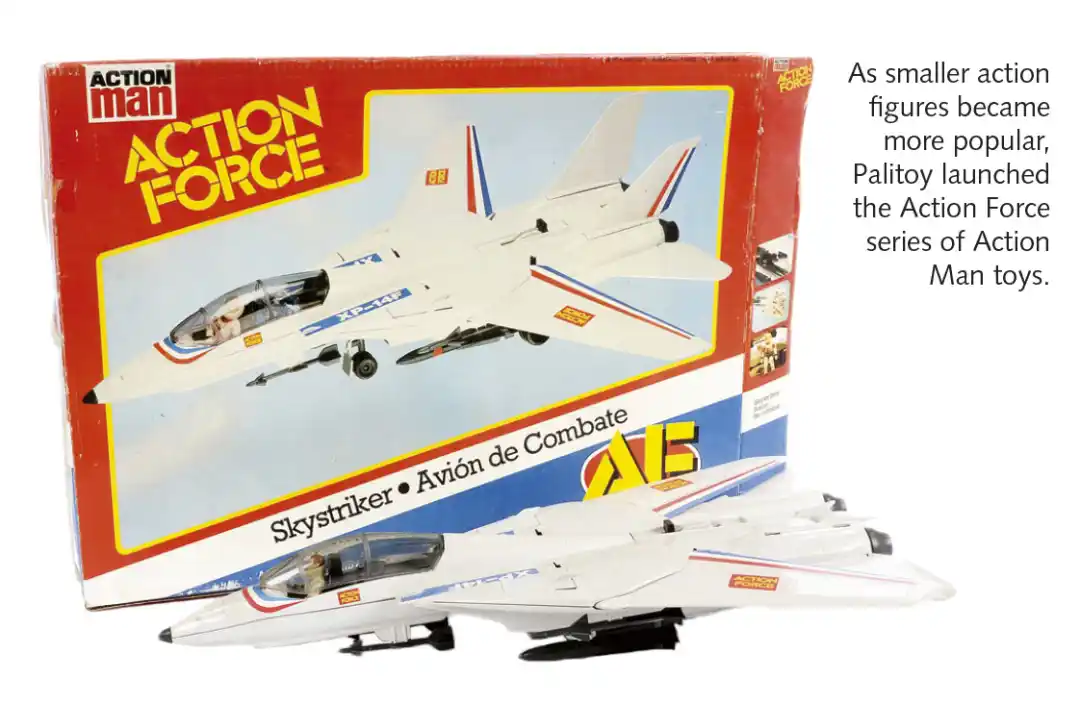
Palitoy and Action Man
The story goes that Palitoy sales director Hal Belton bought his grandson a GI Joe figure during a trip to the States and, once he realised how much his grandson loved it, he quickly took the toy into work to show general manager Miles Fletcher.
Initially there were concerns about whether boys should play with a ‘doll’ and, in fact, the term was banned when discussing the range.
Despite this Action Man was launched in 1966 and, although at first, they were just repackaged GI Joes, in the 1970s Palitoy began producing its own British-themed figures.
Suggested article: Action Man: Ready for Action!
Palitoy and Construction
At some point in the late seventies to early-mid 80s, Palitoy teamed up with Tomy to produce a UK version of the hugely successful Big Loader Construction kit.
A popular 1977 mechanical construction set featuring a motorized vehicle chassis that navigates a track, automatically switching between dump truck, front-end loader, and excavator bodies to move small balls between stations.
This became a huge success in the UK, but because of the decline of Palitoy, it wasn’t long before the deal between Tomy and Palitoy ended. And the Big Loader became branded as solely the Tomy Big Loader.
But that didn’t stop Palitoy including it in one of their advertisements from the late seventies.
Palitoy and Star Wars
In 1968 the Palitoy division was sold to American company General Mills Incorporated, had diversified into consumer products with the acquisition of Parker Bros. and Kenner.
This link with Kenner led to one of the most important periods of Palitoy’s history and, after sub-licensing the Star Wars rights from Kenner, it began releasing Star Wars toys in 1978.
By November 1978 the company had grown to 1,000 employees and sales topped £20 million was phenomenal and initially the company struggled to keep up.
In fact, this struggle to keep up with demand is now why so many collectors are keen to acquire those original Palitoy Star Wars toys because they simply weren’t produced in the same huge quantities as figures from the follow-up films.
However, despite this success, in the early 1980s General Mills’ passion for acquiring more companies proved to be its undoing.
In 1981 Palitoy, Denys Fisher, Chad Valley and the recently acquired Airfix were all based at the Coalville factory and redundancies soon followed.
The death knell for Palitoy sounded in 1984 though when General Mills stopped all European production and the company switched from manufacturing to marketing/distributing for two years until its closure in 1986.
More than 60 years of the Leicester company was ended, but the name will live on for much longer.
Subscribe to our Collectors newsletter to get the latest collecting updates!