


05 February 2026
|
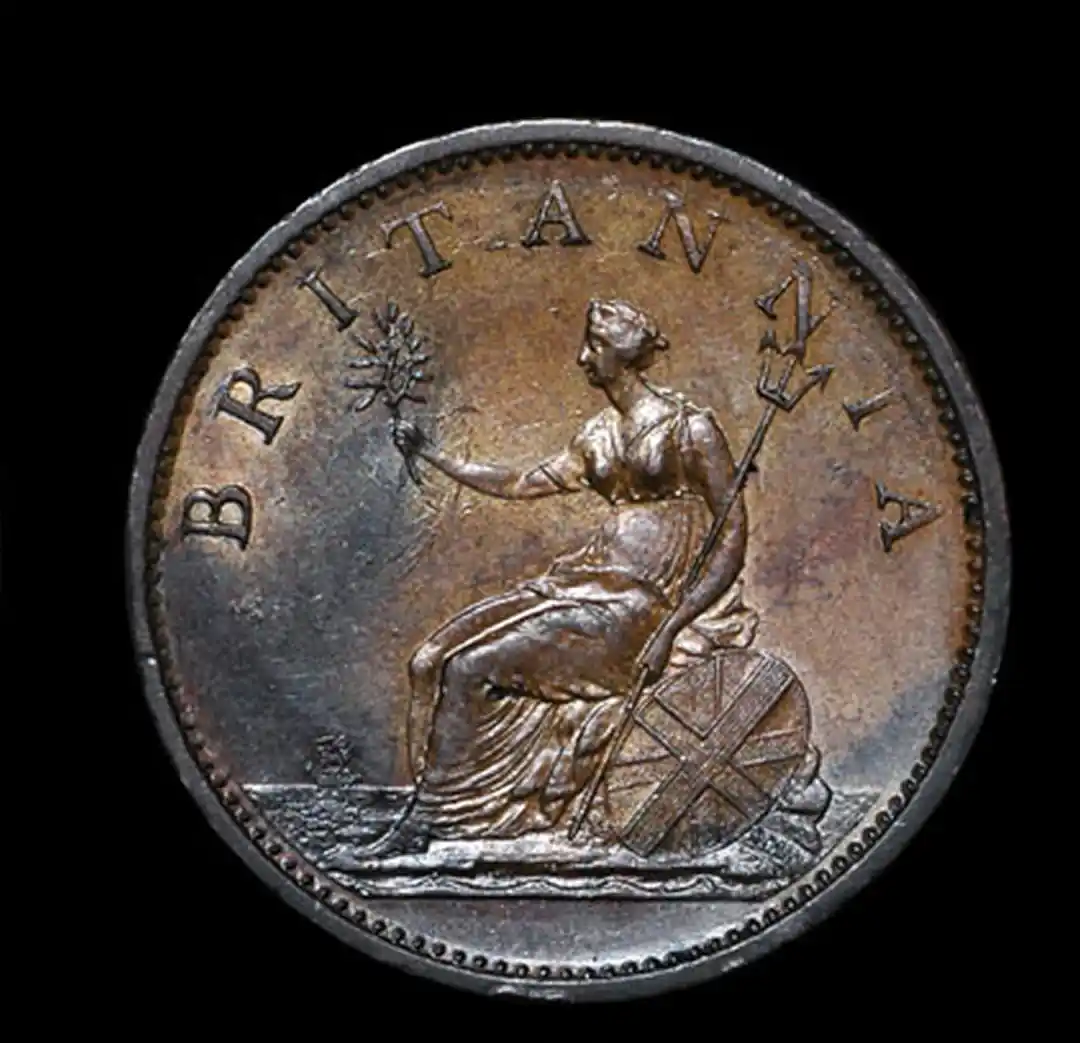 Fortunately the rolling waves, the sailing ship and Britannia’s trident were retained when lighter coppers were introduced to replace the Cartwheels
The seated Britannia on most British copper and bronze coins altered her appearance more frequently than the monarchs on the obverse. Here is our full history on the Britannia featured on British currency.
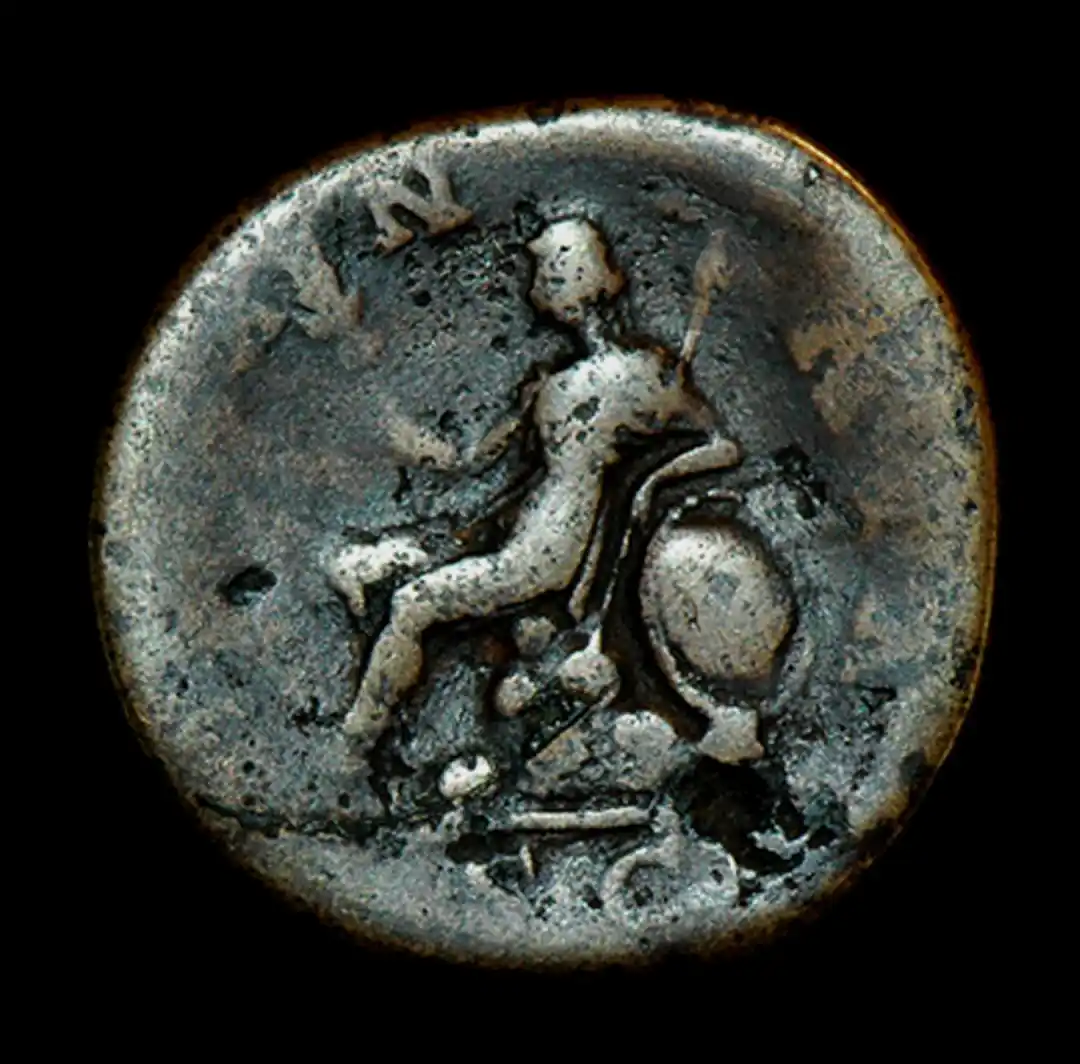
Britannia is a personification of the spirit of our island homeland. She made her debut c.AD 140 on the reverse of a Roman bronze sesterius of Antoninus Pius issued to commemorate the conquest of Scotland by the emperor’s appointed governor, Quintus Lollius Urbicus.
She is shown seated, facing left on a rocky mound, her left arm resting on a shield, her right grasping a Roman legionary standard, and with the legend ‘BRITANNIA S C’ around.
Charles II and Britannia
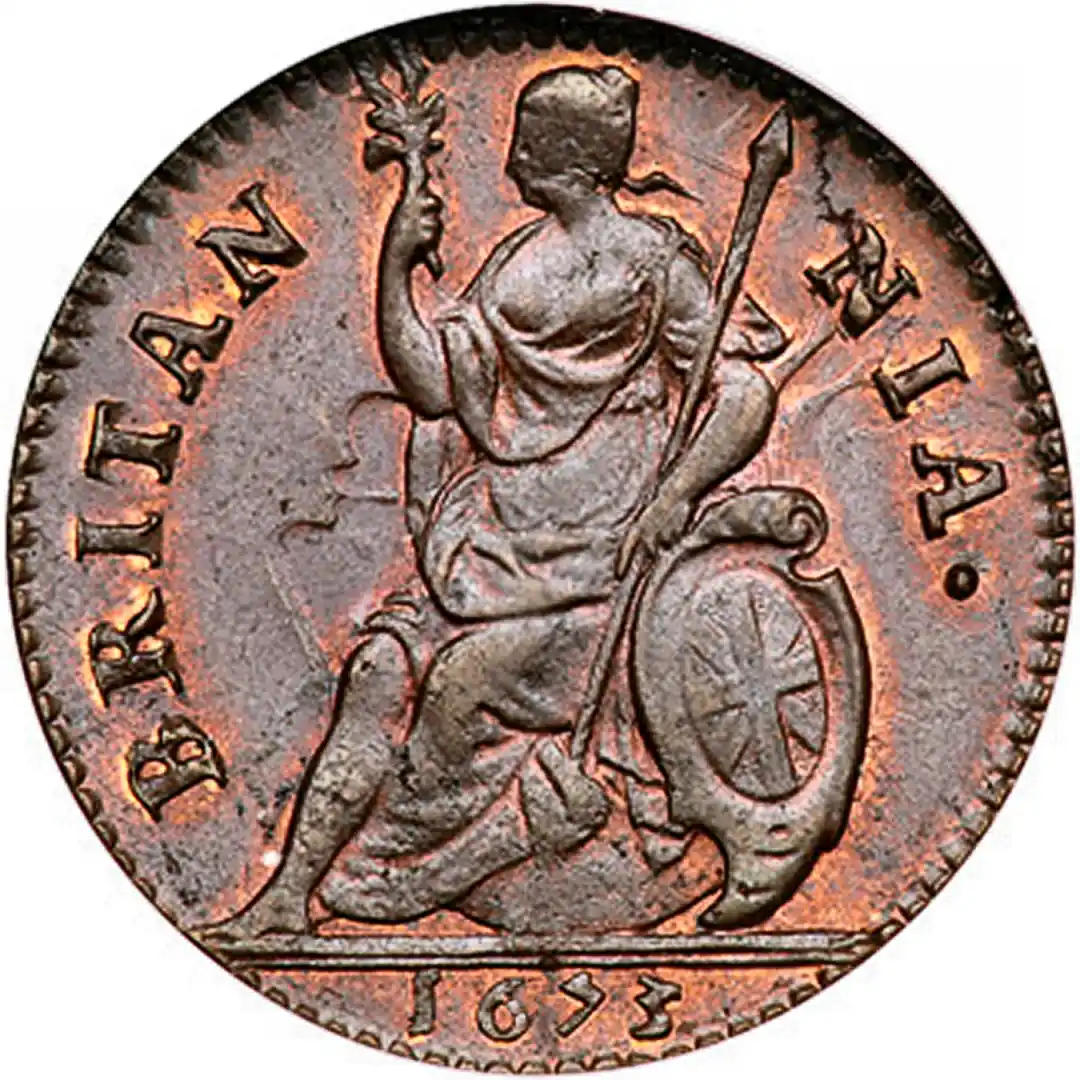
She reappeared in 1672 on the reverse of copper halfpennies and farthings struck in the reign of Charles II.
She looked remarkably similar to her Roman counterpart: seated, facing left, a shield close to her left arm; and with ‘BRITANNIA’ around. Instead of a Roman legionary standard, she supported a spear in the crook of her left arm, while her right hand raised a laurel branch.
At the time rumours circled, it was thought that the Britannia figure had been Frances Teresa Stewart, later Duchess of Richmond. She had infatuated King Charles when at court but rejected his proposal that she could be his mistress.
The king then turned to Barbara Villiers, Duchess of Cleveland, whose name was also linked to the Britannia figure.
Obverses altered with every new ruler; but Britannia’s pose and features remained stubbornly unaltered, an assurance to poor folk that the coppers they accepted as change were English and genuine.
New Regulations
In the reign of George II (1727 – 1760) it was calculated that at least one in five halfpence and farthings in circulation had been made beyond the walls of the Royal Mint because earlier laws protecting the crown’s monopoly on gold and silver currency had overlooked base metals.
Slowly, in 1751 the specific crime of issuing base halfpence and farthings was added to an earlier law against counterfeiting gold and silver money.
The wording of the new clause ran: If any person shall make, coin or counterfeit any brass or copper money called a halfpenny or a farthing, such offender and his aiders and abettors shall, on conviction, suffer two years imprisonment.
For the encouragement of persons to discover and bring such offenders to justice, a reward of £10 shall be given for every conviction.
Get your own George II coins at Royal Mint here!
George III Cartwheel Penny
George III’s Cartwheel Penny was released in 1797. With its full weight of one pennyworth of pure copper, soon swept lightweight evasion money makers out of business. The new coins had a reverse showing Britannia seated for the first time amid waves.
She faced left, held her laurel branch, and now carried a trident in place of a spear. A sailing ship also featured in the left background; and the mintmark ‘SOHO’ was placed below her shield in reference to the Soho Mint, Birmingham where the new coppers were struck.
Alas, cartwheel pennies proved too unwieldy; a shilling’s worth in a pocket weighed twelve ounces and often burst seams.
In the next reign – George IV (1820-1830) – the rising cost of copper ensured that the weight of coins reduced considerably, while the appearance of pennies, halfpennies and farthings also dramatically altered.
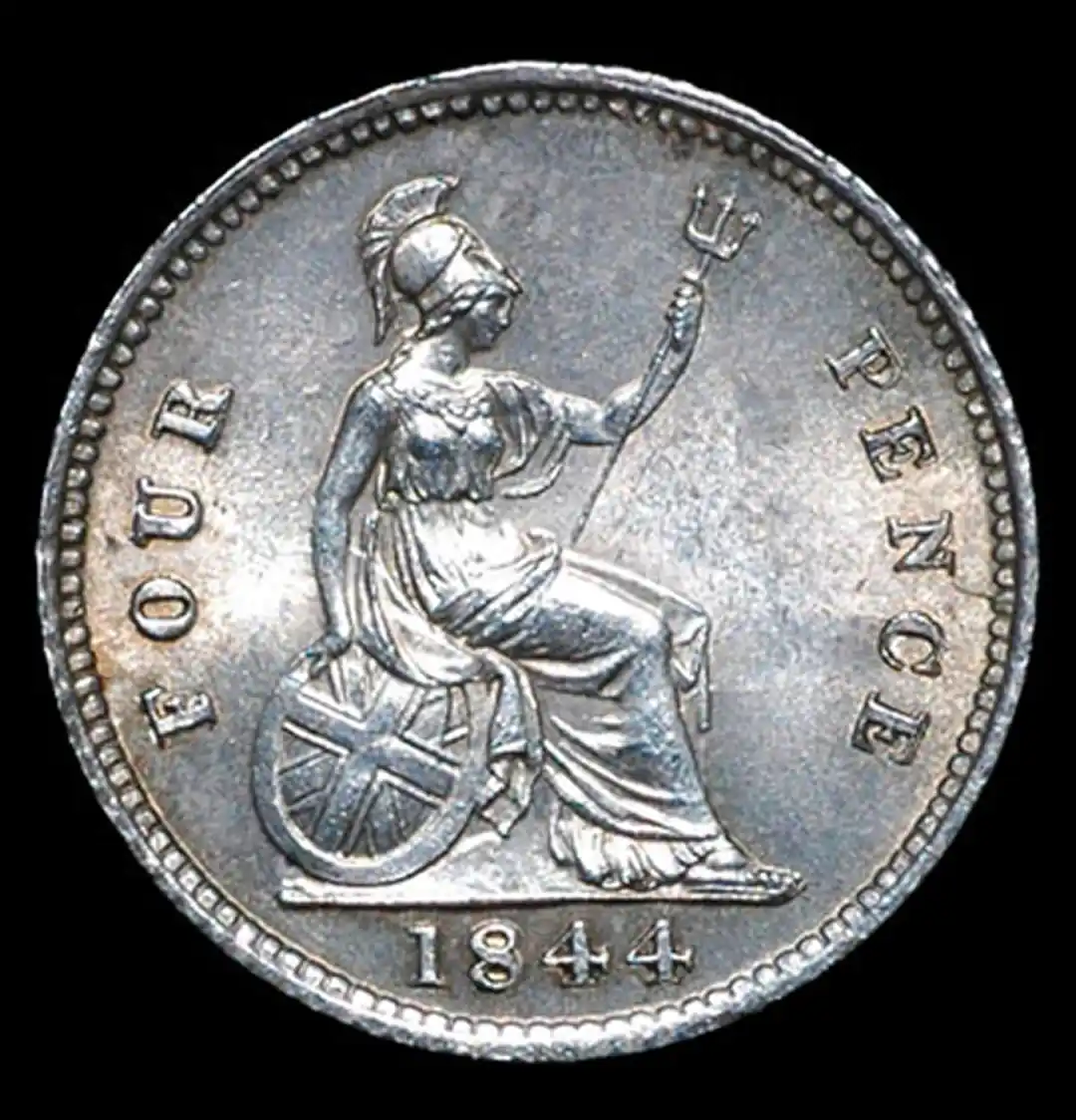
Britannia switched from a left facing to a right facing pose on reverses, an outlook she would not alter again before decimalisation swept pennies, halfpennies and farthings clean away in the 1960s.
She also donned a war helmet reminiscent of that worn by the Ancient Greek warrior goddess, Athena. Her left hand holding the laurel branch lowered, while her right now grasped her trident to move it from an at-rest to a more belligerent on-guard position.
On the first issue George IV farthing a lion crouched at her feet; and all three denominations had exergues occupied by the Union emblem of the rose, shamrock and thistle entwined.
Additionally, the legend altered to ‘BRITANNIAR: REG: FID: DEF:’ (King of [all] the Britains). Nothing altered on reverses of coppers in the next reign – William IV (1830 – 1837); but a miniaturized version of the coppers reverse provided Britannia with an appearance on the silver groat (4d) of this reign in 1836/7.
A similar silver groat with Britannia reverse was also issued during the first twenty years of the next reign.
You can get your hands on a Cartwheel Penny here!
Victoria’s Reign
Victoria (1837-1901) occupied the throne for 64 years, with her copper and bronze issues attracting the attention of specialist collectors who seem to delight in spotting obscure differences on reverses.
The majority are illustrated with large images in Spink’s Coins of England catalogue. Here I shall mention only the major developments which included the appearance of a lighthouse, said to be modelled on the Eddystone; and the re-appearance of a three-masted sailing ship not seen since the Cartwheel penny era.
The floral emblems in exergue were replaced by the year date. On Old Head issues (1885-1901) a larger and more vigorous Britannia portrayal left no room for the lighthouse and sailing ship.
Edward VII’s short reign 1901-1910; and that of George V (1910-1936) had no effect on bronze coin reverses, though Britannia in a standing pose on a ship’s prow occupied the reverse of Edward VII’s silver florins.
The reign of George VI (1936-1952) witnessed the return of a lighthouse to accompany Britannia on the pennies of this reign. At the same time the small three-masted ship was enlarged to take up the entire reverse of the halfpenny; and a wren took possession of the farthing’s reverse.
The same reverses were used on Elizabeth II’s bronze coins from 1953, providing Britannia with her final appearance on the generally circulated penny of 1976. Her manifestations on 50p coins we shall leave to decimal coin collectors.
Thanks to TimeLine Auctions and to the Wildwinds database for help with illustrations for this feature.