


05 June 2026
|
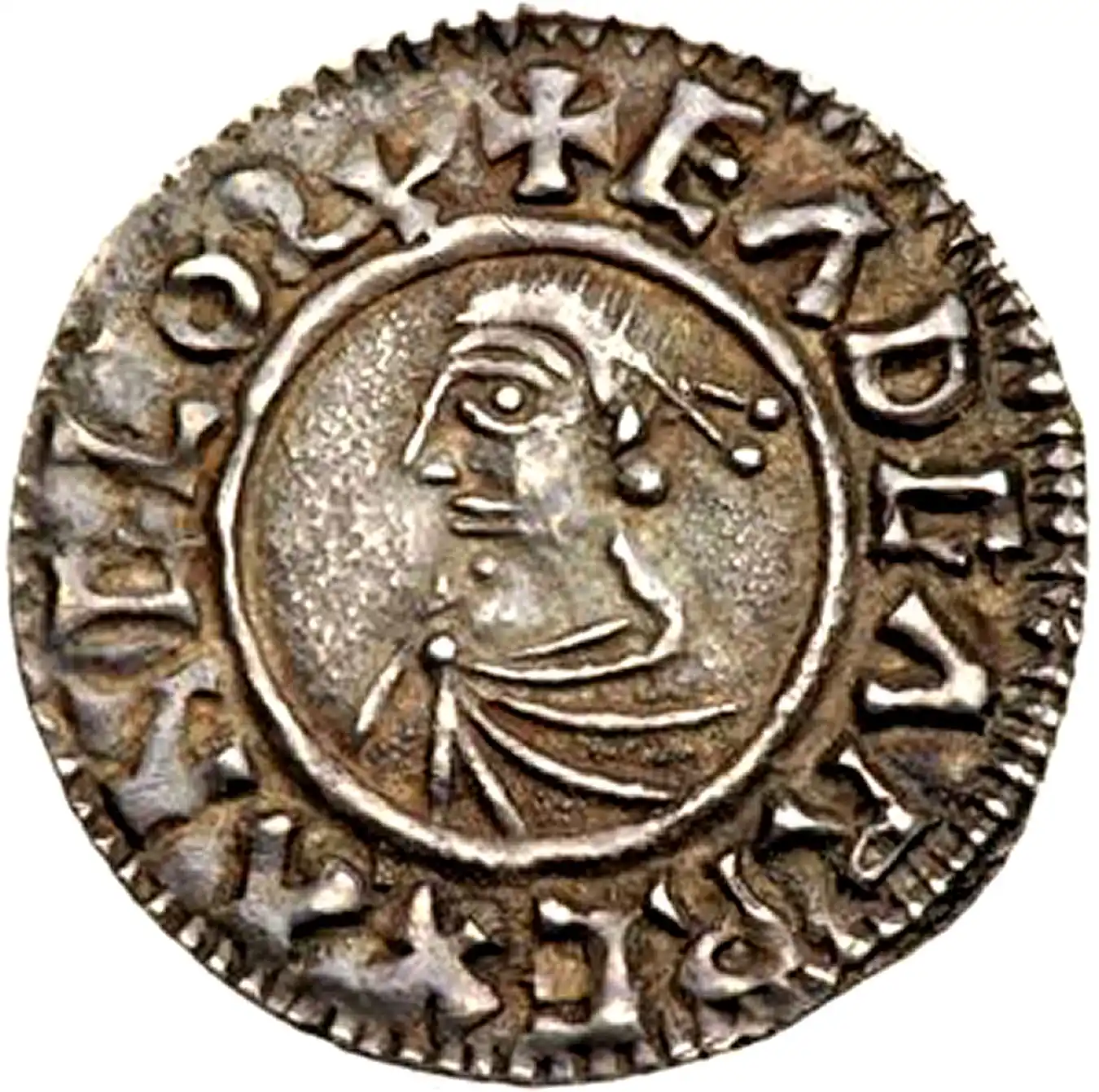
A beginner's guide to Anglo-Saxon coins, exploring their origins, evolving designs and the famous pennies of Offa and Eadgar.
The History of Anglo-Saxon Coins
When the first Saxon settlers arrived in Britain in the late 5th century, some Roman bronze coins were still in circulation. Often heavily worn and clipped, these coins may have been used as local currency or valued according to their weight rather than their original denomination.
Many of the Saxons who settled in Britain came from parts of continental Europe where tribes such as the Franks, Merovingians and Burgundians were already producing their own gold coins after the fall of the Roman Empire.
Trade between these communities and the growing Anglo-Saxon kingdoms in England brought gold coins across the Channel, leading to the production of local copies, probably in centres such as London and Canterbury. Later, when Frankish rulers switched from gold to silver coinage due to economic pressures, Anglo-Saxon England followed the same trend.

These early silver coins, known as sceattas (an Old English word meaning "wealth"), featured a variety of designs. Many showed simplified versions of late Roman coins, with a portrait on one side and a stylised Roman symbol on the other.
Over time, the designs on Anglo-Saxon coins became more varied and imaginative. The human portraits seen on earlier coins gradually evolved into stylised animals, including birds, porcupine-like creatures and mythical beasts.
Other designs featured shields, dragons, four-legged animals, and even images believed to represent the god Wodan. Simple depictions of people, such as archers and churchmen holding crosses, also appeared.
A major change in coinage took place in continental Europe during the 750s, when Charlemagne and his successors introduced a new silver coin known as the denier.
Larger and flatter than the earlier sceatta, the denier provided more space for inscriptions and detailed designs. Its name is the origin of the letter 'd', which was used to represent pence in the old British currency system (£sd), standing for the Roman word denarius.
In England, one of the first rulers to issue a similar silver penny was King Offa of Mercia, who reigned from 757 to 796.
Some of King Offa's earliest silver pennies featured a portrait of the king facing right, alongside the inscription "OFFA REX" (King Offa). The reverse carried the name of the moneyer – the official responsible for producing and guaranteeing the coin's weight and quality.

This basic design, featuring a ruler's name and portrait on one side and the moneyer's details on the other, remained a standard feature of English coinage for centuries.
Other Anglo-Saxon kingdoms, including Kent, East Anglia, Wessex and Northumbria, also produced silver pennies. The Archbishops of Canterbury issued coins, as did the Vikings who later controlled parts of eastern England.
A significant development came during the reign of King Eadgar (959–975), who became the first ruler to be formally crowned King of All England. His coronation took place at Bath Abbey in 973 and marked an important step towards a unified English kingdom.
Around this time, large quantities of silver from newly discovered mines in Saxony entered England through trade, particularly in exchange for English wool. Eadgar used this opportunity to introduce a new standardised coinage known as the Reform Coinage. His pennies featured his portrait and a clear inscription identifying him as king.
Eadgar died in 975 at the age of 32, but the style and format of his coinage continued under later Anglo-Saxon kings and remained largely unchanged until the Norman Conquest in 1066.
What is the Value of Anglo- Saxon Coins?
Anglo-Saxon coins typically range in value from around £100 to several thousand pounds. Their worth depends on a number of factors, including rarity, the mint where they were produced, the reigning monarch, historical significance and, most importantly, the condition of the coin.
Common or fragmented silver sceattas generally trade between £100 and £500, making them an accessible entry point for many collectors. However, rare varieties and well-preserved examples can command significantly higher prices, with some selling for between £2,000 and £10,000 or more at specialist auctions.
Coins issued during the reigns of short-lived monarchs are often particularly sought after, as fewer examples were produced and survived. The rarity of a specific mint can also have a major impact on value. For example, a standard silver penny of Ethelred the Unready might sell for around £500, while a coin struck at a scarce mint could easily achieve more than £2,500.

Collectors also place a premium on coins with unusual designs, clear inscriptions and strong provenance. Coins that can be traced to notable collections or important archaeological discoveries often attract considerable interest when they come to market.
The enduring appeal of Anglo-Saxon coinage was demonstrated in 2024 when a hoard of Anglo-Saxon pennies discovered by metal detectorists was sold at auction for £325,560. The 122 coins were believed to have been buried in 1066, the year of the Battle of Hastings, offering a remarkable snapshot of England at one of the most significant moments in its history.
While only the rarest examples achieve headline-grabbing prices, Anglo-Saxon coins remain a popular area of collecting. With pieces available across a wide range of budgets, they offer collectors the opportunity to own a tangible link to England's early medieval past.
Interested in learning more about historic coin collecting? Explore our other guides and articles for expert insights into British coinage, collecting tips and the fascinating stories behind some of history's most sought-after coins.