


02 March 2026
|
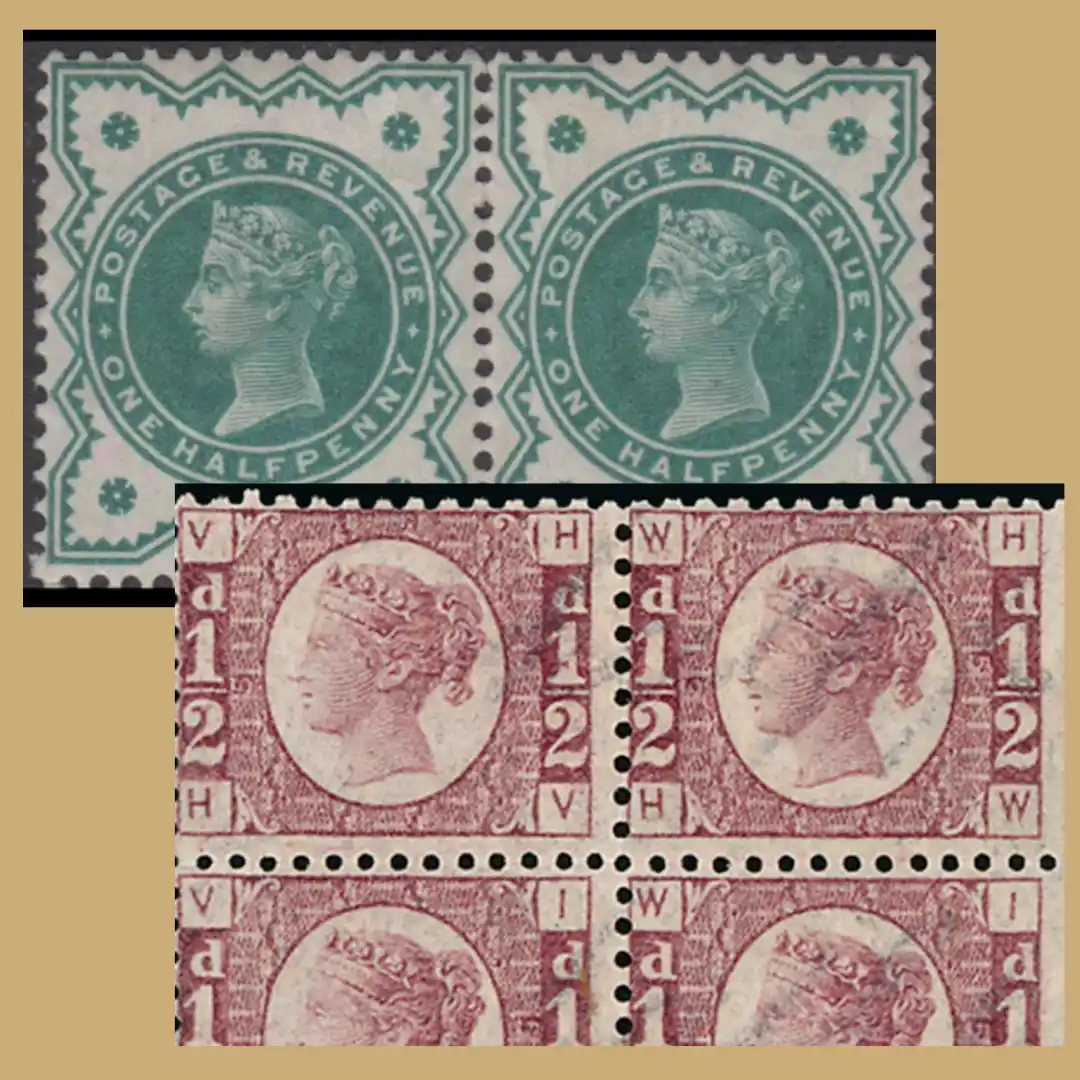
The first Victorian halfpenny stamp was issued in October 1870 and was called the Halfpenny Rose Red. This was followed by the halfpenny blue-green stamp in 1900. Explore this deep dive into the Victorian halfpennies.
The first Victorian Halfpenny Stamp
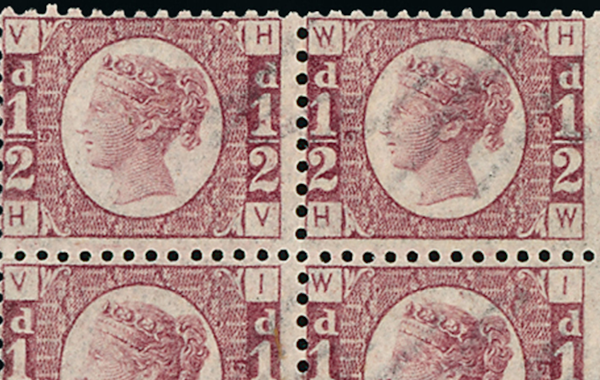
The Halfpenny Rose Red was issued on October 1st, 1870. It was Britain’s first halfpenny stamp, this meant to represent the value the new stamp was half the size of the one penny stamp. The stamps soon became known as ‘Bantams.’
The arrival of the halfpenny stamp marked a big shift in Victorian postal life. With new, lower rates for newspapers and postcards, the Post Office needed a stamp to match.
The London City Press wasn’t exactly impressed, describing the new stamp as “about two thirds the size of the ordinary penny stamp and printed in a similar red,” before adding that the Queen’s portrait was “disfigured” by oversized halfpenny symbols flanking either side. Not the glowing review the designers might have hoped for.
And the criticism didn’t fade quickly. In fact, the halfpenny’s design continued to spark complaints well into the 20th century, securing its place as one of the more controversial Victorian issues.
The design was not as easy as postal authorities would have liked; difficulties arose from the unexpected introduction of the word HALFPENNY into the design mix.
The word was almost twice as long as PENNY, yet required to fit on a stamp half the size of a Penny Red.
The Halfpenny Rose Red was replaced by a standard sized stamp inscribed POSTAGE HALFPENNY. It was surface printed and issued in light green by De La Rue in 1880, thus ending the 10-year use of the unique ‘bantams.’
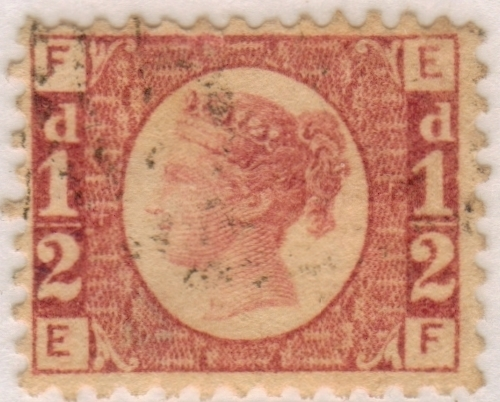
What is the Halfpenny Rose Red Worth?
The value of this stamp generally ranges in value from under £1 for commonly used examples to over £2,000 for rare, high-quality or specific plate numbers in mint condition.
For example, common plate numbers 5, 6 and 10 are typically valued around £2-£15, while specialised, rare plates like plate 9 command high premiums.
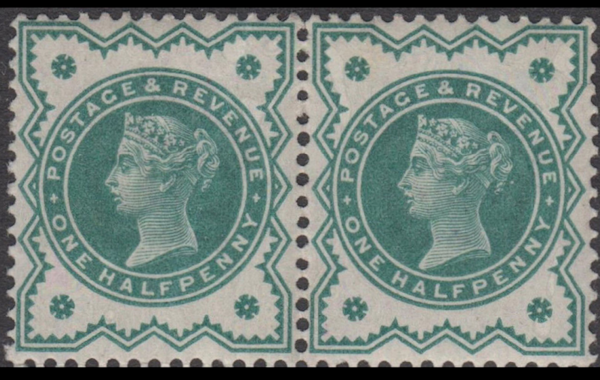
The Victorian Halfpenny Blue-Green
This stamp was released in 1900 and inevitably had only a short working life, but it seems to have attracted the attention of many dealers who stocked up on mint pairs, small blocks, even whole sheets in anticipation of future collector interest.
By 1900, even Queen Victoria’s stamps had to keep up with international standards.
That year, the Postmaster General agreed to switch the halfpenny stamp to a blue‑green shade to align with the rules set by the International Postal Union, which insisted that stamps of the same value across member countries should share a similar colour.
It was a practical change—but one that also marked the final chapter in Victoria’s long stamp‑issuing era.
When the British press encountered the new colour for the first time comments ranged from amused surprise to charges of pandering to Irish Nationalists and the green flag around which they rallied.
Protests shortly gave way to acceptance until a rumour swept the country that the chemicals used to manufacture the printing ink contained lead.
A change to safer zinc-based ink was ordered.
Not long afterwards, however, it was discovered that the new ink was soluble in water which caused the stamp to change colour to bright blue when dampened.
The ink had to be changed yet again to an insoluble formula.
Suggested article: Your Guide to the Victorian Penny Lilac Stamp
How Many Varieties of the Victorian Half-Penny Blue-Green are there?
Leaving aside the blue changelings, the 1900 blue green is occasionally found with an inverted watermark that pushes prices into the low tens of pounds. The 1887 vermillion also offers inverted watermarks in the same price bands as the blue green.
There are also rare imperforate vermilions that are priced over £2,000.
Read even more in-depth collecting guides in every issue of Stamp Collector inc Coin Collector magazine